

Marty McFly is fleeing from Libyan terrorists. He runs into the, now famous, DeLorean and starts the car. He accelerates, and as it reaches 88 miles per hour, the car gets enveloped by electrical activity, and suddenly, it disappears, leaving just a trail of fire.
He, then arrives on November 5, 1955.
We have all seen many such time travel movies. Sometimes, we ourselves fantasize about going back to our pasts, fixing mistakes or perhaps taking paths we failed to take in our lives.
What many of these movies fail to emphasize is that when we speak of time-travel, we are speaking of both time and space travel.

Time travel involves traveling through time and space
If I build a time machine and decide to go six months into the past, if I do not travel in space as well, I will travel 6 months into the past, but exit in the middle of empty space, because, the Earth will be on the other side of the Sun. It will only reach my current position in space after six months. In addition to the rotation and revolution of the Earth, the Sun itself is moving around the Milky Way, the Milky Way is moving through space towards the Great Attractor, and the Universe itself is expanding. So, do you see how difficult it is to accurately calculate the point we need to exit, in space? We can perhaps ignore this problem in movies. However, if we ever do manage to build a time machine, it is something we absolutely need to consider.
While we may theoretically be able to calculate the exact position in space where we need to exit, using sufficiently powerful computers and accurate models of the universe, I speculate that it may be impossible to navigate back to the same past that we experienced, even if we manage to build a time machine capable of accurately positioning us in space (keep in mind, relativity prevents us from traveling faster than the speed of light within spacetime. Hence, if we need to travel back to the days of the Dinosaurs, we may also need to travel a few light years in space due to the motion of the sun and the milky way galaxy).
Most scientists agree that the fundamental unit of this universe is information; they agree that our reality emerges from information. What we feel as time is merely the propagation and transformation of information through space. Time stops when the propagation and transformation of information stops, and time speeds up when the propagation and transformation of information speeds up. Time-travel, thus, would involve the reversal of the propagation and transformation of information. However, I speculate that unless the universe maintains a perfect record of the path and transformation of every bit of information that lead to the present, navigating back to our precise past would be impossible.
It seems that the universe does maintain some record of its past. For example, a stone thrown at a certain speed in space, continues its motion from one division of time to another. Its velocity is maintained and forwarded to the next division of time and then to the next and so on. However, it may be beyond the capacity of this universe to store all the information about the paths and transformations of every bit of information that lead to the present. Some information about the path or transformation is lost during the transition from one division of time to another.
Through a simple thought experiment, let me try to show you why accurately reversing transformations of information may be impossible, unless information about the transformation is also known.
Suppose I designed a perfectly random number generator. I have two of these generators running in parallel. Whatever numbers they generate, they are fed into a computer that multiplies them to generate a result. Each random number generator erases its generated number once it is fed into the computer. The computer itself also does not store the numbers once the multiplication is performed. Now, suppose that the result of that multiplication is 16. I am only aware of the result, I do not know which numbers were multiplied to give me that 16. Hence, if I want to go back to the exact same past that my random number generators experienced, I have to choose one out of an infinite number of possibilities. Why?
Because –
1 x 16 =16,
2 x 8 = 16,
4 x 4 = 16
32 x 0.5 = 16
64 x 0.25 = 16
-1 x -16 = 16,
-2 x -8 = 16
-4 x -4 = 16
-32 x -0.5 = 16
-64 x -0.25 = 16
and so on…
If the number generators are perfectly random, every multiplication that leads to 16 will have the exact same probability of having occurred. What are my chances of selecting the one correct state out of infinite possible states? — Zero (= 1 / infinity).
The universe that we experience is the result of interactions between quantum fields. How and when those interactions occur are probabilistic in nature. We experience interactions that have the highest probability of occurrence. That does not mean that we only experience interactions that are highly probable. We may experience highly improbable interactions too, just by chance. Therefore, unless the universe stores a perfect record of how or why it chose that one specific interaction, instead of one from the other infinite choices, perfectly reversing that interaction, hence, traveling back to the exact same past that we experienced, will be impossible.

The probability of correctly selecting one choice out of an infinite number of choices…
1 / infinity = 0
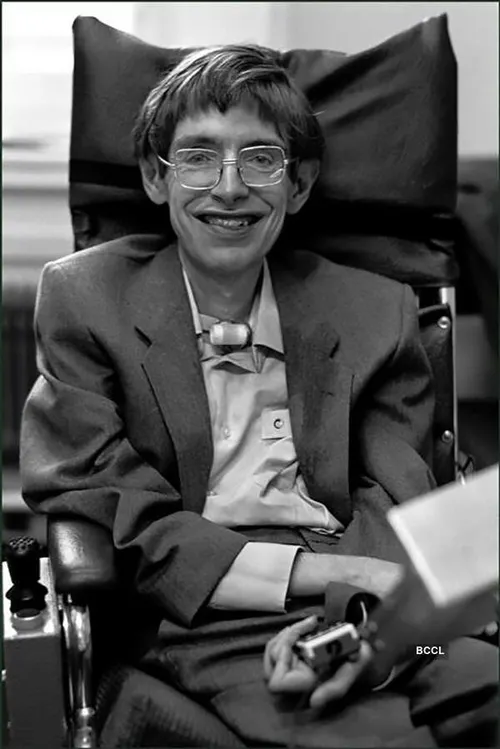
Stephen Hawking, possibly one of the greatest minds of our times, famously held a party for time travelers. He published the time and location of the party at the last moment, ensuring that only someone from the future could know the exact time and location — no one showed up.
Leave a Reply